Smiling Pohorje

Print Add to travel planner
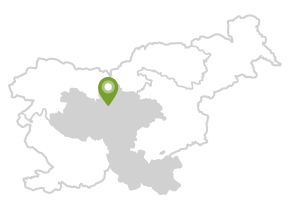
Several natural features give north-eastern Slovenia its particular character. Among the largest are the Pohorje massif, the hills of Slovenske Gorice and the plains of Pomurje. The medieval city of Celje, where Slovenia's only noble family once lived in the castle above the town, lies in a natural basin. Maribor, soon to become the European Capital of Culture, boasts the oldest vine in the world. Ptuj is Slovenia's oldest town. The rivers Drava and Mura, which wind across the region, are two of Slovenia's most important rivers.

Natural sights


The thickly forested Pohorje massif is a green curiosity among Slovenia's mountain regions, famous for its peat marshes, lakes and extensive grassy plains. Other sights worth mentioning include the forest reserve by Črno Jezero (the Black Lake), the Lovrenc Lakes and the Šumnik waterfall. Pohorje is crisscrossed by hiking and cycling trails, while in winter some of the hills are transformed into attractive ski areas.

South of Pohorje lies one of Slovenia's three regional parks. The Kozjansko Regional Park contains a blend of mountainous, hilly and flat areas, with most of the park included in the Europe-wide Natura 2000 network for the protection of biological diversity.

The east of Slovenia has dozens of thermal springs and natural thermal health resorts and thermal spas have grown up around many of them. The most famous of them are the thermal springs in Radenci and Rogaška Slatina.

Although the area is not part of the karst region, even here you can explore two special karst caves. Snežna Jama on Mount Raduha is a breathtaking sight with its long shaft of ice formations, while Pekel Cave is a wonderful example of isolated karst.

Tourist resorts


Most tourist resorts in Smiling Pohorje and the Proud Pannonian Plain area have grown up around important thermal springs and sources of health-giving mineral waters. In this part of the country you have the opportunity to visit as many as ten natural health resorts and several thermal spas. Each one of them offers something special.

In Pomurje you can visit spas in Radenci, Moravske Toplice and Lendava. On the slopes of Pohorje, beneficial thermal springs have been found in Zreče, Dobrna and Topolšica.

As well as being a thermal health resort with its own health-giving mineral water, Donat Mg, Rogaška Slatina is very famous for its crystal and glass products. The products of its glassworks are considered true masterpieces.

Podčetrtek is famous for the Terme Olimia spa, named after the nearby village of Olimje, the location of a monastery containing the oldest pharmacy in Europe.

There is also a thermal health resort in Laško on the river Savinja, best known for its brewery and the annual Festival of Beer and Flowers.

Many visitors come to Mozirje because of the Mozirski Gaj Horticultural Park. Rogatec is the location of Slovenia's largest open-air museum.

Slovenske Konjice is one of the beautifully kept towns in Slovenia. Sights include the old castle, Trebnik Manor, the nearby Žiče Charterhouse with its Gastuž (Guesthouse), the oldest inn in Slovenia, beautifully restored.

Šempeter in the Savinja Valley has an archaeology park with a Roman necropolis, one of the most beautiful archaeological monuments in Slovenia.

Major towns


Any journey to north-eastern Slovenia must include a visit to the country's second-largest city, Maribor. By the river Drava, in the old town centre, the oldest vine in the world still produces grapes every year. The riverside Lent district is lively all year round but in summer, at the time of the Lent Festival, it becomes a meeting place for people from all over Europe. Its status as an important cultural centre with theatres, an opera house and museums is confirmed by the fact that in 2012 Maribor will be the European Capital of Culture. Maribor is also a very important university town, although the city is most famous around the world as an Alpine skiing World Cup venue. The ski area on Pohorje lies practically on the edge of the city. Maribor also has one of the largest traditional wine cellars in Europe, where you can sample the excellent white wines from the surrounding hill vineyards.

Slovenia's third-largest city, Celje, has an attractive medieval centre with museums, galleries and old churches. The city's most famous sight is the Old Castle, once the home of Slovenia's only noble family, the Counts of Cilli. Their coat of arms with its three stars is today part of Slovenia's national flag. The city on the river Savinja is also an important cultural centre and trade fair venue.

Other towns in this part of Slovenia well worth a visit include Ptuj. The oldest town in Slovenia, below the imposing Ptuj Castle, today a museum, is famous for its carnival. Ptuj's characteristic carnival figure is called the Kurent. In Ptuj you can visit the oldest wine cellar in Slovenia and the Terme Ptuj spa. Not far from the town is Ptujsko Jezero on the Drava, where you can fish, while other attractions of the area include a golf course and the famous pilgrimage centre of Ptujska Gora.
Slovenj Gradec has one of the most beautiful town centres in the country. Also worth a visit is the centre of the Šalek Valley with the busy mining town of Velenje, where attractions include the marvellous underground Coal Mining Museum of Slovenia, an excellent tourism and recreation centre by Lake Velenje, and Velenje Museum.

The largest town in the Pomurje region is Murska Sobota, which boasts the Renaissance Sobota Castle, today the home of the regional museum. The nearby Rakičan Manor has a wine cellar and horse riding centre.

Activities


One of the undoubted highlights of a visit to this part of Slovenia is allowing yourself to be pampered in a natural health resort or thermal spa. These also offer a wide range of sports and recreation activities. If you want to explore the surrounding countryside, two excellent choices, besides Pohorje and the Kozjansko Regional Park, are Slovenske Gorice and Goričko.

In Slovenske Gorice you can explore over 50 kilometres of wine routes. Along the way you will find wine shops and farms serving excellent local wine and food to hikers and cyclists.
 
The Goričko region is also crisscrossed by cycling and hiking trails. In this region you will find the largest castle in Slovenia, known simply as Grad ('castle' in Slovene). It is said that this castle once had 365 rooms. Also interesting are the energy points among the exotic trees of the castle gardens.
In winter you can enjoy skiing at the well-maintained ski centres of Mariborsko Pohorje, Rogla, Kope and Golte. Buildings snow castles at Črna na Koroškem is an unforgettable adventure, while in nearby Mežica the abandoned lead mine has been converted into a museum. You can even cycle through its tunnels. Or you can ride a timber raft on the rivers Drava and Mura.


Food and wine


The region is famous for many gastronomic specialities, including bograč, a type of goulash, and the layer cake known as Prekmurska gibanica. The largest winegrowing area in Slovenia, the Podravje wine region, offers excellent white wines. Be sure to sample at least Muscat and Traminer.